Commercial refining strips canola oil at temperatures above 200°C — removing the ALA, tocopherols, and phytosterols that make it worth eating in the first place.
Cold-pressing preserves the full alpha-linolenic acid content that refining destroys.
What happens to oil above 50°C
When oilseed is pressed at high temperatures — or when extracted oil is subsequently refined — several categories of nutritional compounds are either destroyed or removed. The most nutritionally significant of these is alpha-linolenic acid (ALA), an omega-3 fatty acid that is structurally fragile and begins to oxidise above 50°C. Commercial refining typically occurs between 160°C and 230°C.
ALA is classified as an essential fatty acid: the human body cannot synthesise it, and must obtain it from diet. The WHO recommends an ALA intake of 0.5–2% of total daily energy. For most adults eating a typical Pakistani diet — high in refined ghee and hydrogenated vegetable oil — estimated ALA intake is well below this range.
“The refining process removes up to 80% of the tocopherols and the majority of ALA from canola oil. What remains is a shelf-stable, flavour-neutral fat with little to distinguish it nutritionally from other refined vegetable oils.”
What cold-pressing actually preserves
Cold-pressing operates mechanically, without chemical solvents (hexane) and below 50°C — the threshold at which ALA oxidation begins in earnest. The resulting oil retains:
Alpha-linolenic acid (ALA) — the primary omega-3 in canola, at approximately 9–11% of total fatty acids
Tocopherols (vitamin E) — natural antioxidants that protect cell membranes and extend the oil’s natural shelf life
Phytosterols — plant compounds that compete with cholesterol for intestinal absorption, lowering LDL levels in controlled trials
Chlorophyll trace compounds — responsible for the characteristic slight greenish tint and grassy aroma of cold-pressed canola
The omega-6 to omega-3 ratio
Canola’s fatty acid profile — approximately 61% oleic acid (monounsaturated), 21% linoleic acid (omega-6), and 9–11% ALA (omega-3) — gives it one of the most favourable omega-6 to omega-3 ratios of any commonly available cooking oil. The ratio sits at roughly 2:1, compared to sunflower oil at 40:1 and refined palm oil at 45:1.
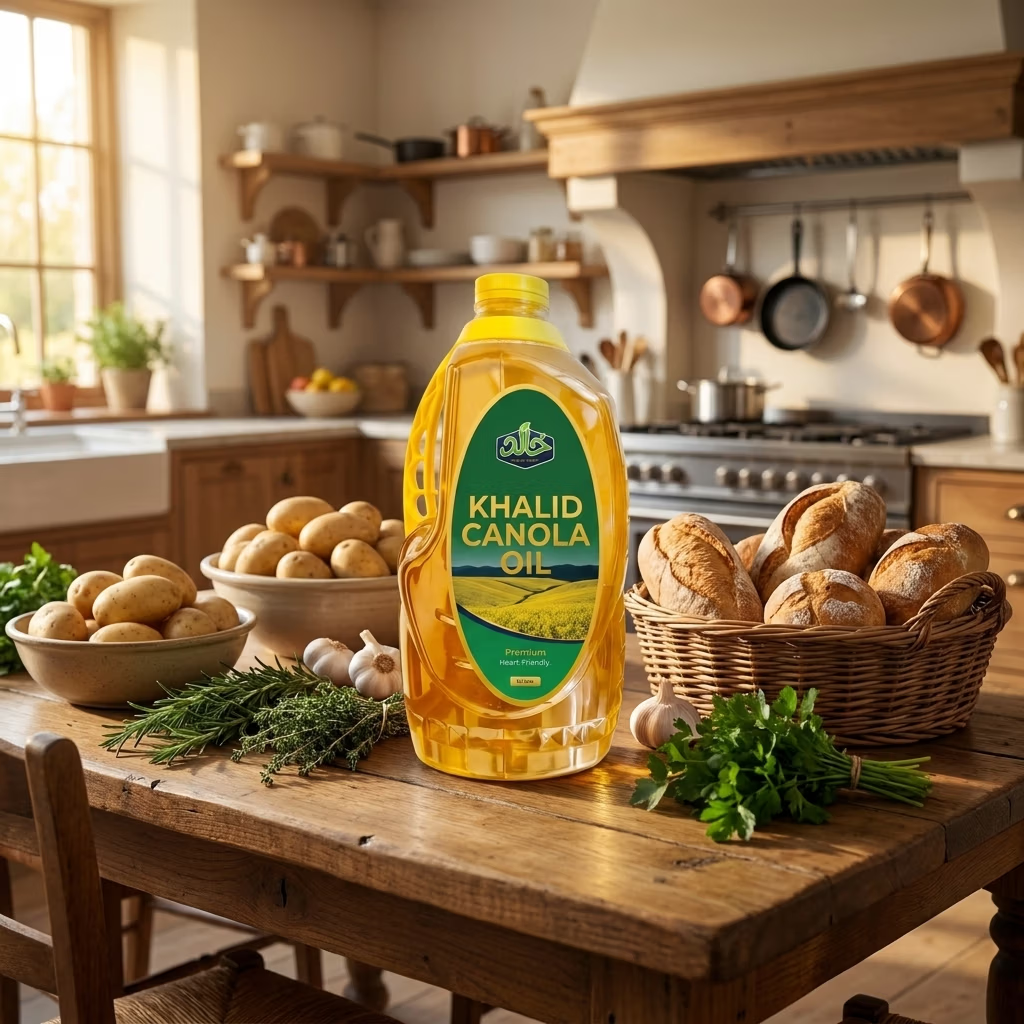
(Product Callout: Khalid Canola Oil)
Cold-pressed vs. ‘extra virgin’: the labelling confusion
Under current PSQCA standards, ‘cold-pressed’ is not a legally defined term for edible oils in Pakistan — unlike ‘extra virgin olive oil,’ which carries ISO-governed standards. This means the label ‘cold-pressed’ can technically appear on a product that was refined after initial pressing, or pressed at temperatures above 50°C using processes marketed as ‘cold extraction.’
The practical test for a consumer is threefold: colour (genuine cold-pressed canola has a golden-to-pale-green tint, not the clear, water-white colour of refined oil), aroma (a mild, faintly nutty smell rather than neutrality), and smoke point (cold-pressed canola smokes at approximately 177°C vs. 240°C for refined — not suitable for high-temperature deep frying, but ideal for sautéing and dressings).
“A lower smoke point is not a defect. It is the direct consequence of retaining the compounds that make cold-pressed canola worth choosing in the first place.”
Practical implications for a Pakistani kitchen
Cold-pressed canola is not a substitute for refined oil in every application. It is best used where its nutritional profile can be preserved: low-to-medium heat cooking (tarka at moderate flame, not high-heat bhuna), salad dressings, dips, and drizzling over finished dishes. Mixed with curd or used as a base for chutney, it delivers ALA and tocopherols without cooking losses.
Where high heat is unavoidable — karahi, deep-frying — a refined oil with a higher smoke point is the appropriate choice. Cold-pressed oil should not be held at frying temperatures: the same tocopherols and ALA that make it nutritionally valuable are the first compounds to degrade under sustained heat.